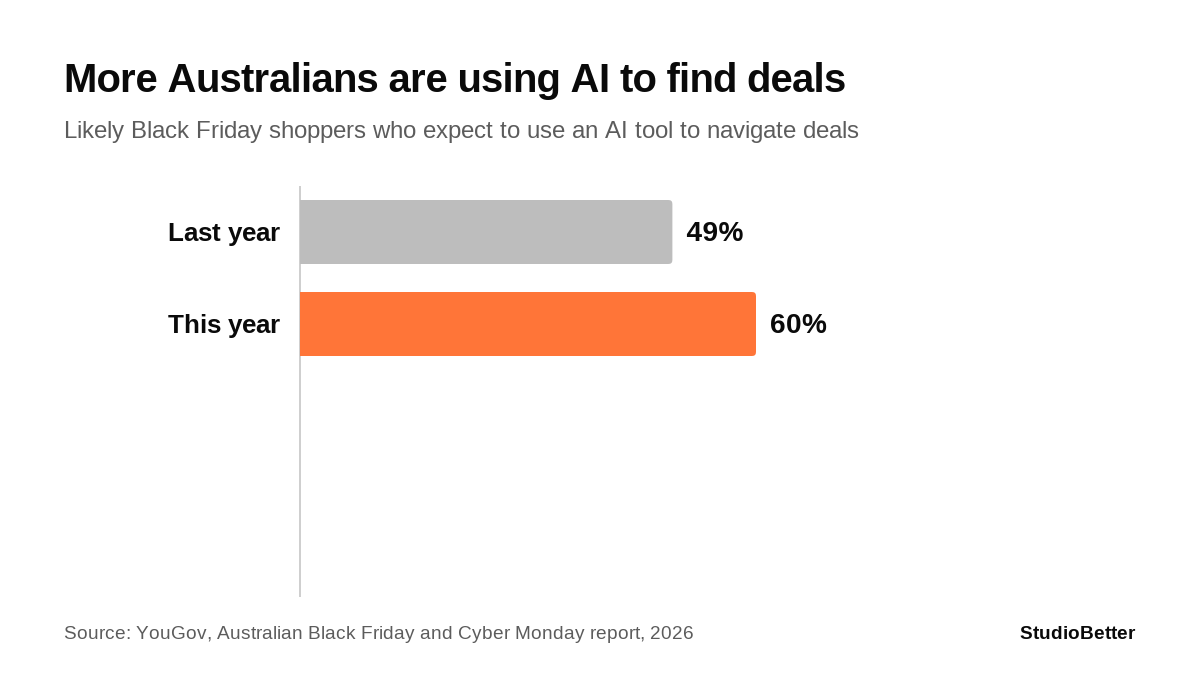
- 60% of likely Australian Black Friday shoppers expect to use an AI tool to find deals this year, up from 49% last year.
- AI can't recommend a sale it can't read. Offers in banner images, last-minute pages and vague copy are invisible to it.
- Five fixes take an hour: plain-text sale details, a navigation link, sale FAQs, a robots.txt check and an updated product feed.
- For Boxing Day and next year, build evergreen sale pages on the same URL, get listed on deal sites and track AI traffic in GA4.
If your Black Friday sale isn’t hitting its numbers, the problem might not be your ads, your creative or your account structure. It could be that AI search tools like ChatGPT, Gemini and Perplexity don’t know your sale exists. It doesn’t have to be that way: our client Bonny just had their most successful Black Friday yet.
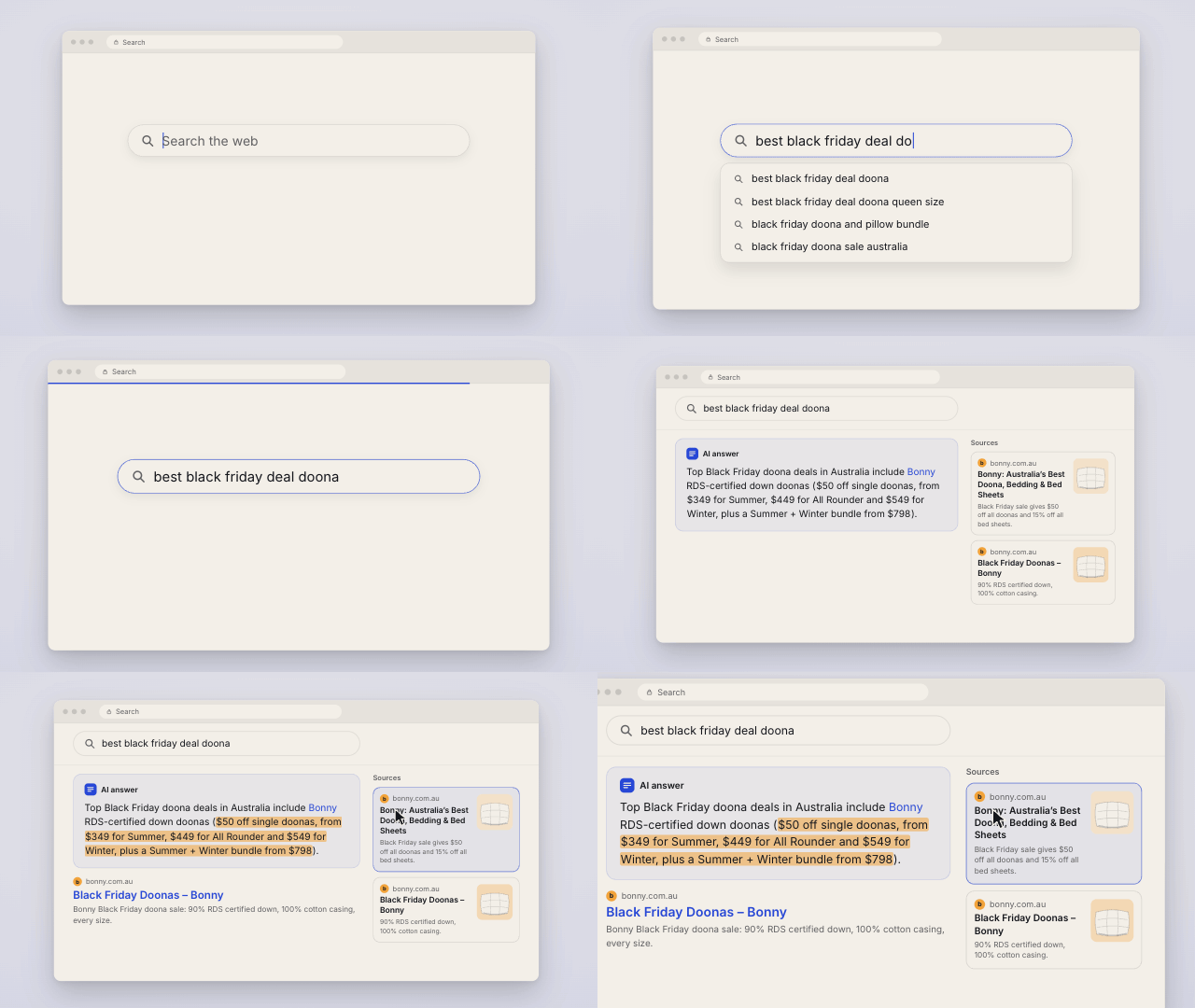
Shoppers are increasingly asking AI to find them the best deal before they ever open Google or click an ad. If your sale isn’t visible to those tools, you’re not in the answer. And if you’re not in the answer, you’re not in the consideration set.
The good news: most of the fixes are simple. Some you can do in the next hour. Others are worth building now so you’re ready for Boxing Day and Black Friday 2027.
Australians are using AI to hunt for Black Friday deals
60% of likely Australian Black Friday shoppers expect to use an AI tool to help them navigate deals this year, up from 49% last year. That’s from YouGov’s 2026 Australian report on AI’s role in Black Friday and Cyber Monday (source).
A few other findings from the same report stand out for retailers:
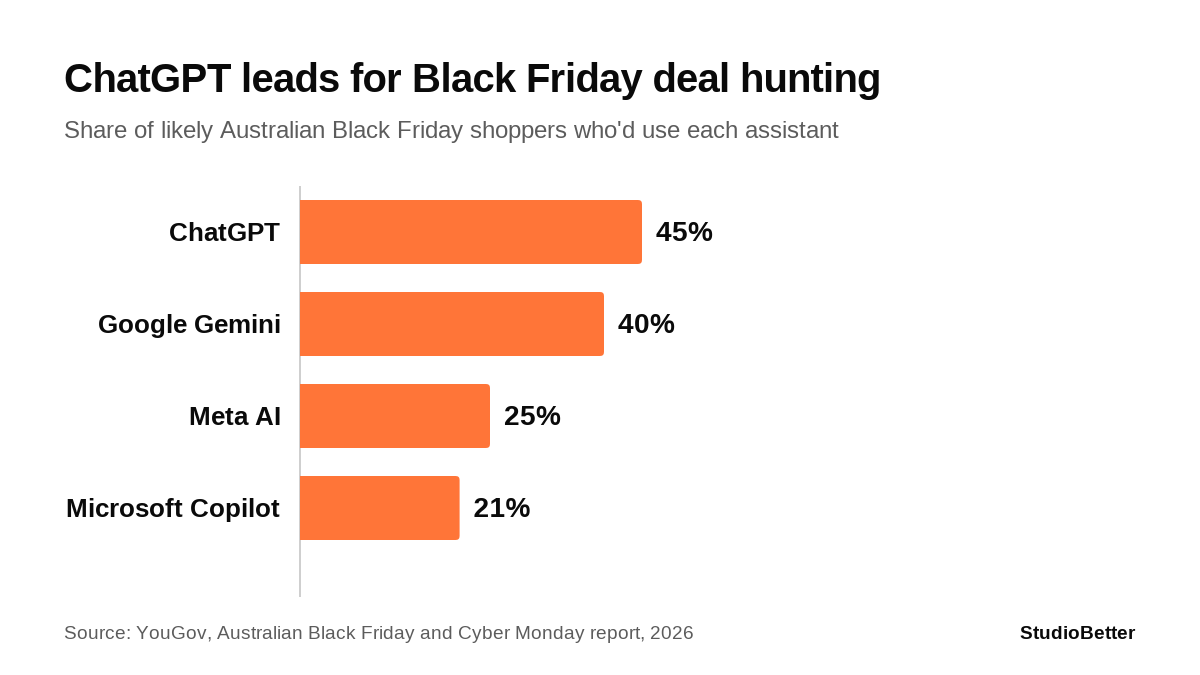
- ChatGPT is the most used assistant. 45% of likely shoppers say they’d use ChatGPT, followed by Google Gemini (40%), Meta AI (25%) and Microsoft Copilot (21%).
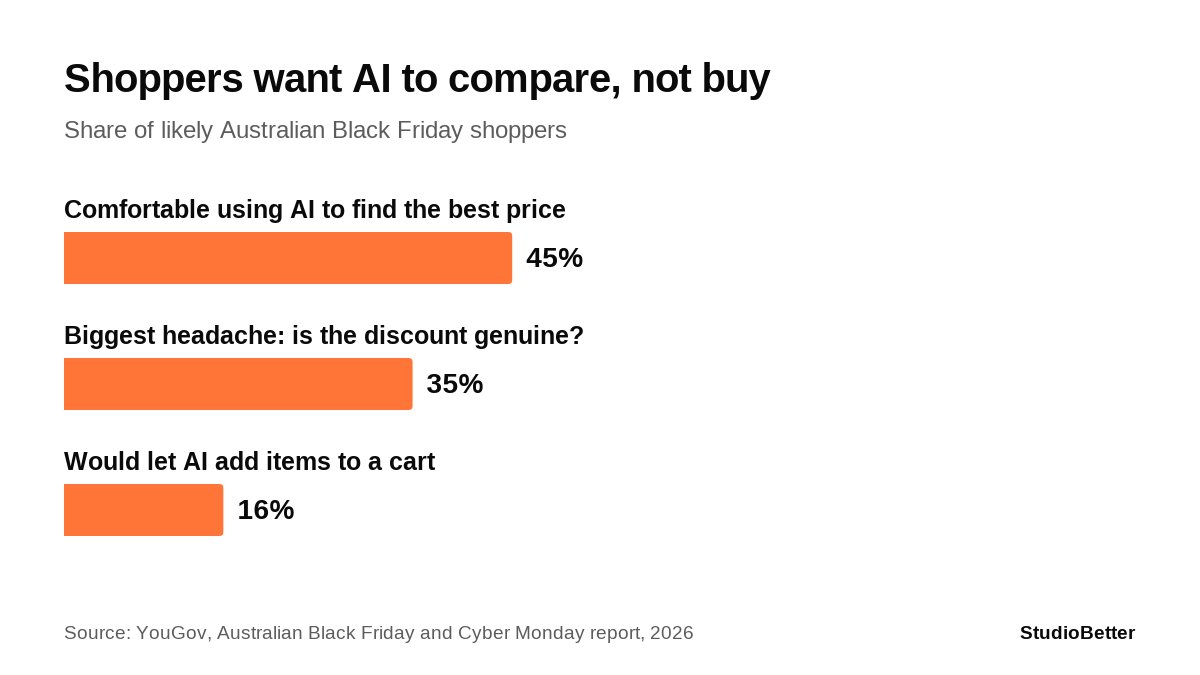
- Shoppers want AI to compare, not buy. 45% are comfortable using AI to find the best price, but only 16% would let it add items to a cart.
- Trust in discounts is low. 35% say their biggest headache is working out whether an advertised discount is genuine.
That last point matters. Shoppers are using AI to research and verify, then they come to your site to buy. If AI can’t find clear, specific details about your sale, it recommends someone whose sale it can find.
Why shoppers are turning to AI
Tight budgets are making shoppers more careful, and AI makes careful research fast. Those two shifts are pushing deal hunting out of the search bar and into the chat window.
Shoppers are making more considered decisions
With household budgets under pressure, fewer people are buying on impulse. Accenture’s holiday survey found only 3% of shoppers plan to make an impulse purchase after seeing a deal. Most decide what they want in advance and wait for the sale to buy it (source).
Shoppers are also sceptical. A BCG survey found just 54% of consumers trust that Black Friday prices are genuinely lower than normal (source). When every dollar counts, people want proof a deal is real before they spend.
AI makes deeper, more specific research easy
A year ago, comparing five products meant ten browser tabs and an hour of reading. Now a shopper can ask ChatGPT one detailed question and get a shortlist in seconds:
“What’s the best queen bamboo sheet set under $200 with free returns in Australia, and who has it on sale this Black Friday?”
That question includes a product, a material, a size, a budget, a returns policy, a country and a sale. Traditional search handles that poorly. AI handles it well, but only if your pages contain those details for it to find.
This is why vague sale copy loses. The more specific shoppers get with AI, the more specific your pages need to be to show up in the answer.
Why AI can’t recommend a sale it can’t find
AI assistants answer deal questions by pulling from pages they can crawl and read: your site, your product feed, and the third-party sites that talk about you. Most Black Friday sales are invisible to them for a few common reasons.
- The offer lives in a banner image or pop-up. AI tools read text. A “30% OFF” graphic tells them nothing.
- The sale page went up yesterday. New pages take time to be crawled and indexed. A page launched during sale week has no history and no links.
- There’s no dedicated page at all. If your sale is just a discount code at checkout, there’s nothing for AI to cite.
- The details are vague. “Huge savings storewide” gives AI nothing to work with. “30% off all bedding, 27 November to 1 December” does.
- Crawlers are blocked. Some security settings and plugins block AI crawlers by default without anyone realising.
- Nobody else is talking about it. When someone asks for the best Black Friday deals in a category, AI often leans on deal roundups, forums and publishers, not brand sites.
Five fixes any business owner can make in an hour
None of these need a developer or a site rebuild. Most can be done in your platform’s admin.
- Write your sale details in plain text. Put the discount, the dates, what’s included and what’s excluded in a sentence on the page. For example: “30% off all bedding and towels, Friday 27 November to Monday 1 December. Excludes gift cards.”
- Add your sale to the main navigation. A link in your top menu tells shoppers and crawlers that this page matters. It also links the page from every page on your site.
- Add FAQs about your sale. Answer the questions people actually type into ChatGPT: When does the sale end? Do discount codes stack? What are the Christmas shipping cut-offs? Can I return sale items?
- Check your robots.txt. Visit yoursite.com.au/robots.txt and make sure it isn’t blocking OAI-SearchBot (ChatGPT), PerplexityBot or Googlebot. If you’re on Cloudflare, check its AI crawler settings too.
- Update your product feed. Make sure sale prices and sale dates are live in Google Merchant Center. Google’s AI Mode and Shopping results pull pricing from the feed, not your page.
The bigger wins that take longer
These won’t rescue this weekend, but they’re what separates brands that show up in AI answers every year from those that scramble every November.
Build evergreen sale pages
Create Black Friday pages for your major categories, not just one storewide page. Think /black-friday/bedding or /black-friday/skincare, matched to how people search. Link them from your footer or an HTML sitemap so they’re always crawlable.
Keep them live all year
Use the same URL every year: /black-friday, not /black-friday-2026. A page that’s been live for years builds links and authority. A page launched during sale week starts from zero. Outside the sale, switch the content to “coming soon”, last year’s highlights or an email signup.
Get listed where AI looks
AI answers about the best deals lean heavily on third-party sources. Getting your sale onto OzBargain, publisher gift guides, relevant subreddits and affiliate deal pages can matter more than your own page.
Add structured data
Use Product and Offer schema with the sale price and an end date (priceValidUntil). This lets machines read your deal without guessing.
Plan past Cyber Monday
Black Friday is one moment in a longer peak. Give Cyber Monday, Christmas gifting and Boxing Day their own evergreen pages, or one /sale hub that links to all of them. Don’t take seasonal pages down the day the sale ends.
How to tell if AI is sending you shoppers
You can see AI traffic in GA4 today. Go to Reports, then Acquisition, then Traffic acquisition, and set the dimension to Session source. Look for sources like chatgpt.com, perplexity.ai, gemini.google.com and copilot.microsoft.com.
For a cleaner view, create a custom channel group called “AI Assistants” using a regex on session source that matches those domains. That lets you compare AI-referred sessions, conversion rate and revenue against organic search and paid.
Then check which landing pages AI is sending people to. Those are the pages AI already trusts, so make sure they have current pricing, stock, delivery details and reviews.
One caveat: not every AI-influenced sale shows up as a referral. Many shoppers research in ChatGPT, then search your brand on Google. Watch branded search volume over the sale period as well.
Claim your business in ChatGPT’s Business Hub
OpenAI launched Businesses in ChatGPT in beta on 10 November 2026. It works through Business Hub, a new section in ChatGPT’s sidebar, and it’s open to eligible businesses anywhere ChatGPT is available, including Australia (source).
Think of it as ChatGPT’s version of a Google Business Profile. Once you claim and verify your business, you can:
- Update your details. Website, description, logo, and delivery and return policies.
- Add a product feed. Upload pricing and availability so ChatGPT works from current information, which matters when your prices change for a sale.
- See your AI visibility. Business Hub shows how often ChatGPT mentions you, how many people click through to your website, and the common topics in conversations where your site is cited (source).
On Shopify, you can connect your store from Business Hub or the Shopify admin, and eligible products are already in ChatGPT through Shopify Catalog.
Two things to know. Claiming a profile doesn’t boost your visibility on its own, so the fixes above still do the heavy lifting (source). And Business Agents, which let shoppers chat with your brand inside ChatGPT, are only available to US ecommerce and online service businesses for now.
Even so, the mention and click data is the first direct view most brands have had of how ChatGPT talks about them. Claim your profile now so you have a baseline going into Boxing Day.
Want to set yourself up for next year?
We're running 5 free AI SEO implementation sessions this month for brands that want to get this right.
Want help getting this right?
The one-hour fixes are a start. The bigger wins take a plan: which pages to build, which deal sites to target, and how to make sure your products are showing up in AI shopping results.
Message Caleb directly on LinkedIn, or get in touch for a free audit of your setup.